About

sample the book INSTRUCTOR RESOURCES buy the book

About the Book
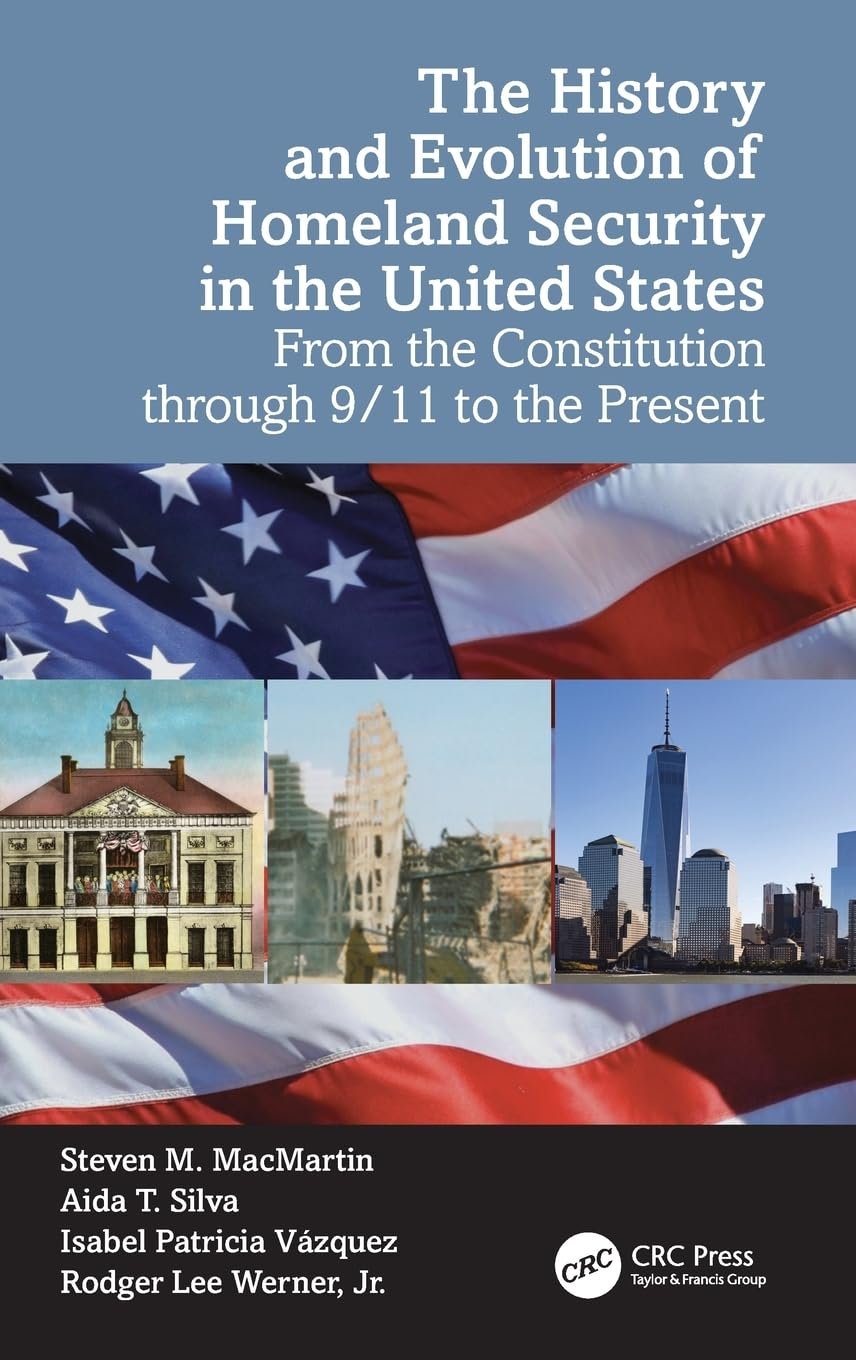
The History and Evolution of Homeland Security in the United States From the Constitution through 9/11 to the Present

Authors
Steven MacMartin, D.B.A.
Aida T. Silva, J.D.
Isabel Vázquez, M.P.A.
Rodger Lee Werner, Jr., M.S.


Overview

The History of U.S. Homeland Security provides students with a comprehensive understanding of the challenges and threats that have shaped the nation’s domestic security landscape from the founding era to the present day. The text examines how federal, state, local, and private-sector entities have responded to natural disasters, human‑caused hazards, terrorism, and emerging threats across more than two centuries.
Designed for students pursuing careers in Homeland Security, the book offers a foundational exploration of the development of security policies and strategies both before and after the creation of the Department of Homeland Security (DHS). It traces the evolution of agencies and institutions responsible for domestic defense, public safety, and national resilience.

Purpose and Academic Value
Beyond its historical narrative, the book equips students with the analytical and critical‑thinking skills necessary to evaluate the effectiveness of past and current Homeland Security policies. By understanding how earlier decisions, structures, and crises shaped today’s security environment, readers are better prepared to engage with contemporary debates surrounding:
• Privacy and civil liberties
• Border security
• Critical infrastructure protection
• Cybersecurity
• Interagency coordination
• National preparedness and resilience


The text serves as a foundation for future practitioners, helping them develop informed perspectives and sound decision‑making skills as they enter the Homeland Security field.

Why This Book Matters
Understanding Homeland Security requires more than memorizing agencies, laws, or historical events. It demands a clear view of how the United States has confronted threats across centuries — and how those responses have shaped the systems we rely on today. This book provides that essential perspective.

By tracing the evolution of Homeland Security from the Constitution to the post‑9/11 era, the text reveals the deeper forces that influence national preparedness, interagency coordination, and the balance between security and civil liberties. Students gain not only historical knowledge but also the analytical tools needed to evaluate modern challenges such as terrorism, cyber threats, natural disasters, and emerging technologies.

For instructors, the book offers a structured, academically rigorous foundation for teaching the origins, development, and future trajectory of Homeland Security. For students, it builds the critical thinking skills required to understand why policies change, how institutions adapt, and what effective security leadership looks like in a complex world.

Ultimately, this book matters because it connects past to present — helping readers understand how we arrived at today’s Homeland Security landscape and why informed, historically grounded decision‑making is essential for the future.